The festivities of the holidays are over. And the bright warmer longer days of Spring still feel so far away.
We can all tell that things feel different when it’s cold compared to when it’s warm and hot, but this doesn’t just mean the temperature feels different. Our mental states and emotions tend to shift in a negative direction along with the temperature. Weather conditions can significantly alter our brain chemistry and function, according to Yale School of Medicine.
So, unless we can suddenly migrate south during the winter like the birds, this isn’t something we can exactly avoid. Though all of us probably experience a little bit of the winter blues. Some people are affected by a medical condition called seasonal depression.
Seasonal Depression, medically known as Seasonal Affective Disorder (SAD), is a type of depression that’s related to changes in season. However, it’s not just during the cold that this disorder can affect you but also as it gets warmer. It doesn’t affect everyone but for the ones who do have it, normally it starts in the fall and continues into the winter months, sapping your energy and making you feel moody.
Anonymously choosing to go by J.D. one student shared her struggle with seasonal mood shifts. “I think this time of the year can cause emotional shifts in high schoolers-or even anybody-for numerous reasons. The weather definitely plays a big part in it. When the weather’s colder and it’s dark outside by 5pm it often leads people to staying indoors or going out less leading to less social interaction which can feel isolating”. J.D. added how this time of the year makes it hard for students to stay motivated and focused. The isolation and lack of motivation can be rather depressing.
A Newport Academy study evaluated why cold months negatively impact our mental state. “Since much of our vitamin D comes from the sun, the darker winter months can create a vitamin D deficiency, which can depression symptoms.” Not only that, but it also differs between genders. “Three-quarters of people diagnosed with SAD are female. However, men may have more severe symptoms.”
Though we may all struggle a bit more through the cold, darker months of January and February, if you feel you are struggling more than is normal, reach out to someone for help. Seasonal Affective Disorder tends to start in fall around November but peaks here in January and February.
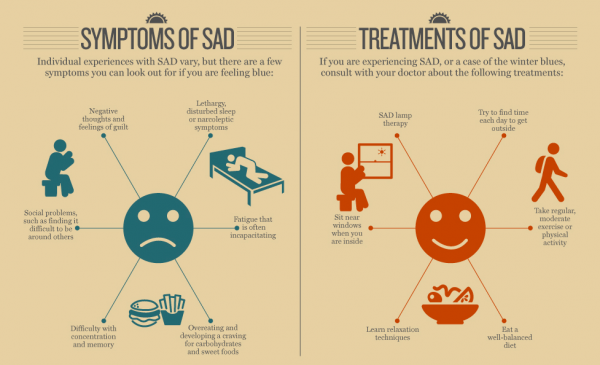
Check out the I Care Health Network‘s graphic above to know the signs and symptoms and ways to treat Seasonal Affective Disorder.